
The morning sky over southern Bangladesh used to glow gold over the rice paddies. Now, it glows red — the color of mud churned by floodwaters. On what was once firm farmland, 42-year-old Rehana stands waist-deep in water, clutching a faded photograph of her family’s old home. “It’s gone,” she says simply. “The river took it last night.”
Rehana isn’t alone. Her village, once home to 800 families, now holds fewer than 200. The rest have scattered — some to nearby cities, others across borders. Each one carries the same silent grief: the loss of a place that once defined them.
🌍 The Growing Wave of Displacement
Across the world, climate change is creating more refugees than war.
According to the UN, an average of 20 million people are displaced every year by climate-related disasters — floods, droughts, hurricanes, and wildfires. Unlike traditional refugees, they have no legal status, no guaranteed right to resettlement, and often no way back home.
From the drought-stricken Sahel to the sinking deltas of Southeast Asia, millions are caught in motion — not seeking a better life, just a place to survive.
In Central America, farmers abandon their fields after years of failed crops.
In the Pacific, entire communities are relocating from islands like Kiribati and Tuvalu.
In California and Greece, fire refugees flee flames that consume whole towns in hours.
The crisis is everywhere, yet it is often invisible — a migration without maps.
💔 Rehana’s Story Is Everyone’s Story
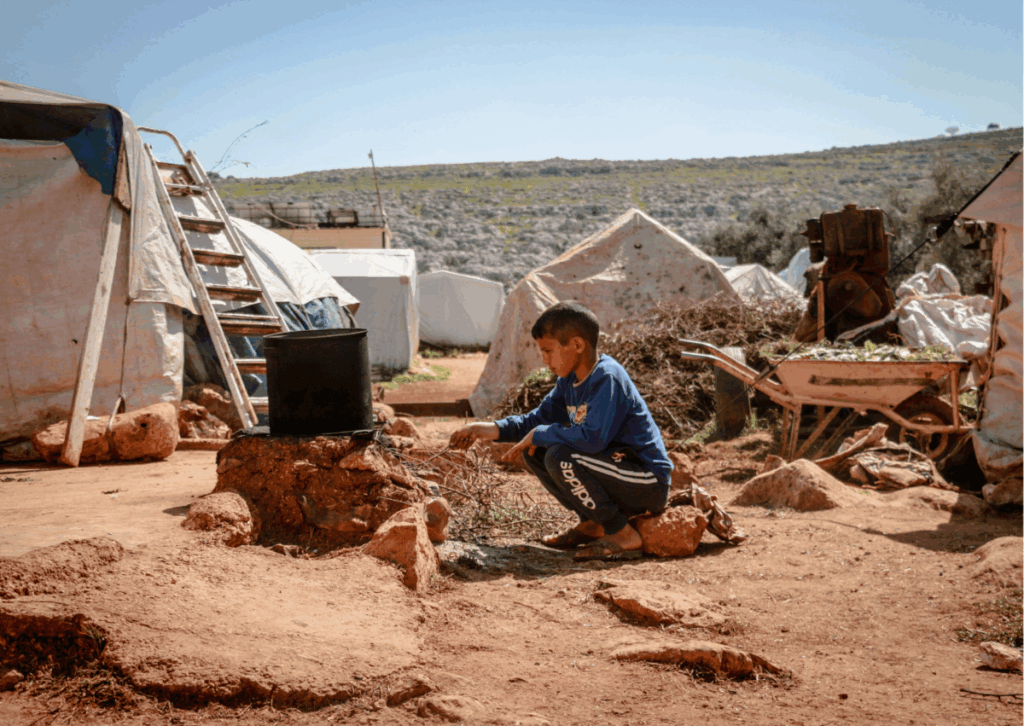
Rehana and her three children now live in a crowded informal camp on the edge of Khulna City. Her husband works construction, when there’s work to find. The children go to school sporadically. When it rains, water seeps through the tarpaulin walls.
“Sometimes,” she says, “I wake at night and I can still hear the river outside the window. But there’s no window anymore.”
Still, she doesn’t give up. She’s joined a local women’s group funded by WorldsClimateChange.com that helps displaced families start over — giving micro-grants to launch small businesses, training in safe housing construction, and access to clean water and solar light.
With support, she opened a small sewing stall under a tin roof. It doesn’t erase the pain of what’s gone, but it helps her stitch a new kind of future.
🌱 How WorldsClimateChange.com Is Responding
At WorldsClimateChange.com, we believe that every person deserves safety, dignity, and belonging — no matter where climate forces them to go. Through partnerships across Asia, Africa, and Latin America, we’re helping families like Rehana’s rebuild their lives from the ground up.
Here’s how your donations are making that possible:
- 🏠 Emergency housing and relocation assistance for families uprooted by floods and storms.
- 💧 Clean water access through solar-powered pumps and portable purification units.
- 🌞 Renewable energy kits providing light, safety, and power in temporary camps.
- 💼 Livelihood recovery programs, especially for women and youth.
Each dollar you give supports people not as statistics — but as neighbors with dreams and dignity.
🌏 The Bigger Picture
Climate displacement isn’t just about geography — it’s about justice.
Those contributing least to global emissions are suffering the most.
A farmer in Bangladesh, a fisherman in the Philippines, or a herder in Ethiopia didn’t create this crisis — but they are paying the price for it.
If the world continues on its current path, experts predict over 200 million people could become climate-displaced by 2050. That means entire cultures, languages, and histories risk being erased by the tide.
But displacement doesn’t have to mean despair.
It can also mean a movement — of compassion, of solidarity, of collective power.
❤️ How You Can Help
Every donation, every share, every voice raised in empathy makes a difference.
When you give to WorldsClimateChange.com, you help transform stories of loss into stories of survival. You help rebuild homes, restore hope, and remind families that the world still cares.
👉 $30 provides clean water to a displaced family for a month.
👉 $75 funds emergency shelter kits for flood survivors.
👉 $150 supports a family’s relocation and livelihood recovery.
We cannot stop every storm — but we can ensure no one faces it alone.
When Rehana threads her sewing machine each morning, she hums softly — a song her mother taught her, once sung beside the river that’s now gone.
“Maybe my children,” she says, “will sing it in a safer place.”
Let’s make that place real.
Donate today at WorldsClimateChange.com/donate — and help turn displacement into determination.